Order the Plain One: Why the Best Alcohol-Free Cocktails Aren't Trying So Hard
There is a drink doing the rounds in British bars that arrives under a glass dome, releases a cloud of cedar smoke, and is finished tableside with a dehydrated citrus wheel clipped to the rim like a medal. It contains no alcohol. It costs eleven pounds. And it is, almost without exception, too sweet.
None of that is a crime. Theatre has its place, and a Saturday night deserves a bit of it. But somewhere between the first alcohol-free menu and now, we seem to have decided that a drink without booze has to work twice as hard to be taken seriously — and that the way to prove itself is novelty rather than quality.
It doesn't. A good low-and-no drink should be judged exactly like any other cocktail: is it balanced, does it have texture, is it cold enough, and would you genuinely want a second one?
A Stunt Is Not the Same as Care
There's a difference between a drink that has been thought about and a drink that has been decorated. The decorated one usually has a long list of ingredients and a long list of instructions, and the balance has been solved by adding sugar until the sharper edges disappeared.
A drink that has been thought about is quieter. It might be a highball with a proper tonic, a good grapefruit peel and a pinch of salt. It might be a stirred, clarified thing with verjus and a little tea. It might be a small measure of dry vermouth topped with soda — technically low-alcohol, genuinely delicious, and rarely offered because it doesn't look impressive on a menu.
Both can be good. Only one of them scales to a long evening.
Judge It the Way You'd Judge a Martini
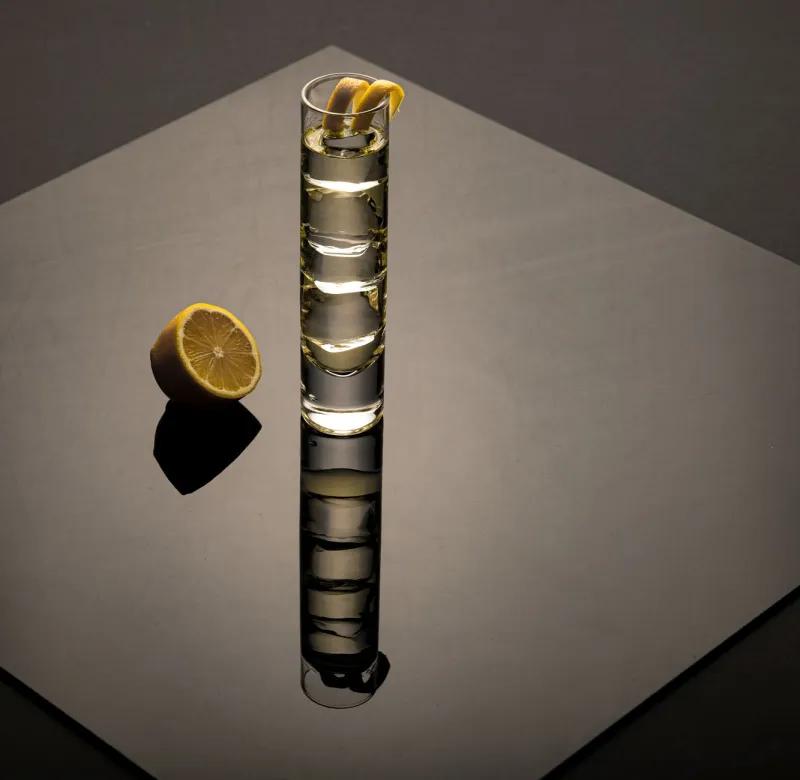
If someone handed you a Martini and asked what you thought, you wouldn't talk about the garnish first. You'd talk about temperature, dilution, whether the edges were sharp or soft, whether it finished clean or cloying.
Apply the same test to an alcohol-free drink:
- Balance. Is the sweetness doing structural work, or is it covering something up?
- Texture. Alcohol gives body. Take it out and something has to replace the weight — a touch of saline, a milk wash, coconut water, a shrub, a proper measure of tonic with actual quinine in it.
- Length. A long drink should stay interesting to the bottom of the glass. A short one should leave you wanting another sip rather than a glass of water.
- Temperature. A drink built for a warm room needs to arrive properly cold and stay that way. Ice that gives up in four minutes flattens everything.
That's the whole rubric. No smoke required.
The Menu Tells You Everything
You can learn a lot about a venue from where the alcohol-free drinks sit on the list.
If they're in a small italicised block at the very bottom, after the desserts, that's a statement — however unintentional — about how the bar thinks of them. If they're scattered through the list, sitting cheerfully next to the sours and the spritzes, it's a different message entirely: these are drinks, not substitutions.
The best sign is a bar with two or three alcohol-free options in genuinely different styles. One long and refreshing, one short and bitter, one that's basically a good soft drink done properly. That spread suggests someone has actually tasted them and thought about the person who might order two.
How to Order Without the Ceremony
You don't need to explain yourself, and you don't need to accept the most elaborate thing on the list because it's the only option.
A few lines that work almost anywhere in the UK:
"Something long and not too sweet, no alcohol — whatever the bartender likes making."
"Have you got anything bitter? A spritz sort of thing, without the prosecco."
"What's the low-alcohol option? I'm pacing."
That last one is worth remembering. Low-alcohol is not a failure of commitment; it's a technique. A small measure of vermouth or a sherry and soda is a real drink with real complexity, and it lets you have three across an evening rather than one and a headache.
The other quiet hero of the modern bar is the alcohol-free beer on draught. It has improved beyond recognition, it arrives cold, it comes in a glass that looks like everyone else's, and it doesn't require a conversation. Sometimes that's the entire point.
Pacing a Long Night Out
The biggest practical issue with alcohol-free cocktails is not flavour — it's volume and sugar. Three sweet, heavily built drinks in two hours is a lot of syrup, and the resulting crash is not the gentle, sociable tiredness you were aiming for.
So alternate. Have the elaborate one first if you fancy it, then move to something dry and long. Drink water between rounds, which you should be doing anyway. Order something salty at the ninety-minute mark. And don't spend the evening chasing the sensation of drinking — that's a losing game, and the prize is a headache.
What you're actually buying with a low-and-no night is stamina. You get the whole evening: the early aperitif, the middle of the night, the last conversation, the walk to the station, the ability to be a functioning person the next morning. That's a better transaction than it sounds when you're two drinks into a night that's going well.
What Good Actually Looks Like
A great alcohol-free drink is unbothered. It's properly cold, properly balanced, garnished with something it actually needed, and served by someone who didn't announce its lack of alcohol like an apology.
It doesn't need a gold medal, a smoke dome, or a backstory. It needs a bartender who tasted it before it left the bar and a menu that treats it like the rest of the list.
Order the plain one. If the bar is any good, it'll be the best thing on the table.