Ticket Number Forty-Seven: Reading a Lounge by Its Coat Rail
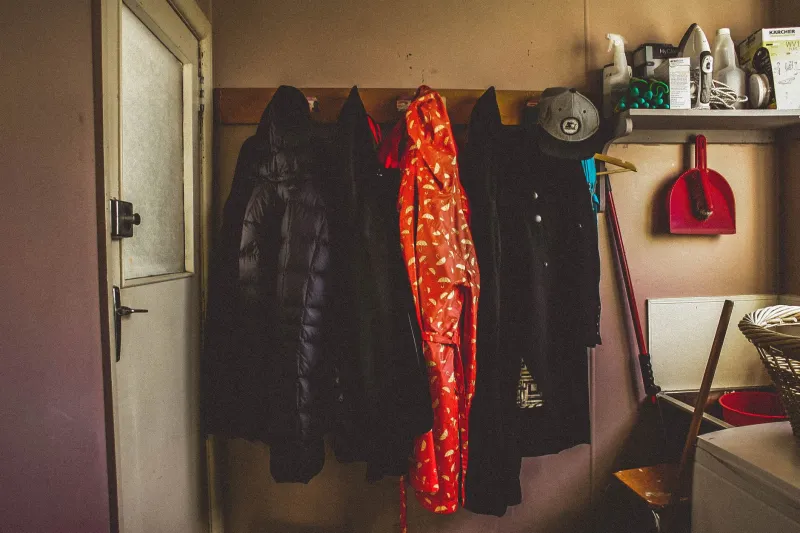
There is a particular moment, somewhere around early November, when every UK bar becomes a cloakroom with a drinks licence attached. You feel it the second the door swings in: a wall of warm air, a scrum of people who have all arrived at once, and a rail that is already groaning under six parkas and somebody's damp trench coat.
You have a choice to make before you have even seen a menu. Hand the coat over, or spend the next three hours with it draped across the back of your chair like a sleeping dog. What happens in those first ninety seconds tells you a surprising amount about how the rest of the night will go — more, honestly, than the cocktail list will.
The doorway shuffle
Four of you come in. Two puffers, one wool overcoat, one of those enormous scarves that is basically a blanket with ambitions. The door closes behind you and the room makes its first impression.
Is there a human being standing there whose actual job is coats? Or is there a rail by the toilets with a handwritten sign and nobody in sight? Both are answers. Neither is automatically bad — a tiny neighbourhood bar with a good rail and an honest sign is often a better night than a vast venue with an understaffed desk and a queue curling into the gents.
The point is that the cloakroom is the first piece of hospitality you receive. It arrives before the greeting, before the drinks, before anyone has asked what you want. It is a venue's opening line.
The ticket test
A proper system leaves you holding something. A numbered card, a stub, a little scrap with the bar's name printed on it. That scrap means somebody has sat down and thought about the end of the night, not just the beginning: how many coats come in, how many go out, how you prove which is which at half eleven when the room is loud and everyone's memory has softened.
Watch what the ticket actually is. A printed card with the venue's logo is a venue that has done the arithmetic. A torn-off raffle ticket is fine, functional, honest. A post-it note stuck to your sleeve is a warning sign — charming for about an hour, chaos by midnight.
And then there is the worst version: 'just pop it on the rail, love.' No ticket, no number, no system. This is not a disaster. It is simply information. It means your coat is your responsibility, so keep an eye on it, and do not be surprised when the 11:45 retrieval turns into a slow-motion scrum of people holding up identical black jackets.
The overfilled rail problem
Walk past a coat rail that is three deep and you learn something about capacity. Someone did the sums on tables and not on outerwear. The result is a row of crushed shoulders, one sleeve trailing on the floor, a wool coat carrying the weight of four others, and a faint smell that suggests nothing on that rail has been allowed to breathe since October.
That matters practically. Creased lapels, a damp hem from a wet umbrella parked underneath, a scarf that comes back with a stranger's hair on it. None of it ruins a night, but all of it is the sort of small, avoidable friction that a room either notices or does not.
The good ones leave gaps. They use proper hangers rather than hooks. They keep a separate corner for wet coats and umbrellas so the rest of the rail is not quietly marinating in November drizzle. It is unglamorous work and it is precisely the sort of unglamorous work that separates a venue that wants you back from one that just wants you in.
When there is no cloakroom at all
Plenty of small UK bars and back-street pubs simply do not have the space, and that is fine — as long as they are honest about it. A clear sign saying 'coats on the back of your chair, we take no responsibility' is better than a rail that silently mangles everything hung on it.
Your move in that situation is straightforward. Book the banquette rather than the two-top, because a booth gives you a coat-sized hinterland. Take the seat facing the window or the door and put the coat over the back of the one nobody wants to sit in. If it is raining, bring the sort of bag that can swallow a folded jacket whole. And if you are planning a long one, wear the lighter layer and accept that you will be cold for exactly four minutes on the way there.
Reading the whole thing in thirty seconds
A short field guide, for the doorway:
- Is there a person? Someone who looks like they are assigned to the rail, not just standing near it.
- Is there a ticket? Any numbered system beats no system.
- Is the rail spaced? Gaps between hangers mean someone is thinking ahead.
- Is there an umbrella stand? Small detail, enormous difference in a British winter.
- Is there a charge? A couple of pounds is fair for the service; a fiver for a hook is a mood.
- What happens if you lose the ticket? Ask before you walk away. The answer reveals the whole philosophy.
The last conversation of the night
The person on the cloakroom is, in most lounges, the last member of staff you speak to. At ten to twelve, with the lights coming up and everyone hunting for a scarf, they are the one reuniting strangers with their belongings in a room full of identical navy coats. That job is done well quietly, and it is noticed.
So hand the coat over properly. Take the ticket. Say thank you. If there is a jar, use it. And if the venue has made the whole thing effortless — the rail spaced, the ticket printed, the coat returned dry and intact — that is not a small thing. It is the same instinct that will have put a good drink in front of you an hour earlier, and it is worth remembering on the way to the taxi rank.