Listen Before You Order: How a Lounge’s Sound Mix Sets the Night
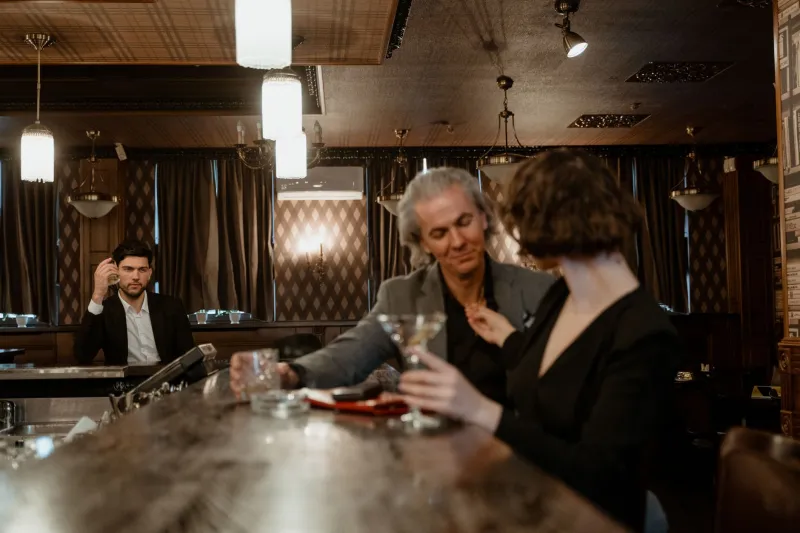
Most lounge nights are decided before the cocktail menu appears. You walk in, coat still on, and the room tells you what kind of evening it plans to be. Not through lighting or furniture, but through sound. The volume, the bounce off the walls, the way a bassline sits under conversation — that is the first real test of a UK lounge, and it is far more useful than a chalkboard promising good vibes.
The first thirty seconds tell you more than the cocktail list
Stand still for half a minute after you get through the door. Can you hear the person greeting you without leaning in? Can you hear your own voice at normal volume? If the answer is no at 7.30pm on a Thursday in Manchester, Leeds or Birmingham, the room is already working against you.
A good lounge should feel alive without asking you to compete with it. Early evening sound is part of the hospitality, not a warning siren. It should cover the clink of glassware and the low hum of other tables without turning every conversation into a lean-in. If you are shouting before the first round arrives, you are not in a lounge with atmosphere. You are in a room with a volume problem.
Shouting before nine is not atmosphere
Some venues confuse loudness with energy. They turn the music up at 7pm and assume the room will follow. It rarely does. What happens instead is that people order faster, lean closer, and decide not to stay for a second drink. A room that forces raised voices before 9pm is telling you something useful: it has not thought about the shape of the night.
The danger is worse for group bookings. Six people around a table will already struggle to hear one another. Add a speaker directly overhead and the night becomes a series of repeated sentences and polite nods. By 11pm, everyone is hoarse and someone is checking train times. The music may have been good. The room simply did not give it anywhere to sit.
Good sound design has a shape
A well-run lounge does not jump from background music to club volume in one move. It builds. Early evening should be warm and conversational, maybe a little low-slung soul or soft electronic. Around 9pm, the mix can tighten: a touch more bass, a little less space between tracks, a gentle shift in pace. After 10pm, a lift is welcome — as long as it feels like the room exhaling, not a fire alarm going off.
The best sound design is almost invisible. You notice that you are still talking easily at 8.15pm. You notice that the music has become more interesting at 10.30pm without anyone having to shout over it. You notice that the room has moved on, and so have you. That is not an accident. It is the volume dial being used as an ingredient, not a switch.
The late-hour lift, and the rooms that get it wrong
Late-night volume is not the enemy. A lounge needs a lift after 10pm, especially on a Friday or Saturday when people have settled in and the night needs a little momentum. The problem is timing. If a venue is playing club-level sound while people are still working through small plates at 8.45pm, it is not a lounge. It is a club with stools.
The tell is usually the gap between tables. Rooms that expect conversation leave space for it. Rooms that expect shouting push tables together and turn the speakers up. If you want a night that ends calmly — with a last drink and a sensible exit — look for a venue that treats volume as something to be adjusted, not endured.
How to judge a room before you commit to a big booking
Visit at the time you would actually arrive. A room at 6pm tells you almost nothing about the same room at 9.30pm. If you are booking for eight or ten people, ask where you will be seated and whether there is a speaker near the table. A good host will know. A great host will move you before you have to ask.
Look at the room, too. High ceilings can smear sound; low ceilings can trap it. Hard surfaces bounce noise back at you, while curtains, banquettes and soft furnishings absorb it. Basement rooms can turn boomy. Glass-fronted rooms can echo. None of this is fatal, but it matters when the plan is a long, talkative night rather than a quick drink.
Ask for a table away from the speakers, not merely a table for six. If the venue cannot adjust the volume or move you, believe what the room is telling you. A lounge that will not turn the music down by a notch for a booked table is unlikely to look after the rest of the night.
What to do when the mix is off
Speak up early and politely. Ask if the music can come down a touch, especially if you are ordering food or settling in for a long session. Staff who understand their room will usually oblige. If you are with a group, nominate one person to ask rather than sending a chorus of complaints. And if the room is simply too loud for the night you wanted, consider a second venue. A short walk is better than three hours of shouting.
The Verve Lounge rule is simple: a good night out should get louder without making you louder. Listen before you order. The room will tell you whether it knows how to build a night — or whether it is just turning the dial and hoping.